
I’ve written about growing up in the suburbs of Minnesota, dreaming of one day living an eventful life in a place where things actually happen. Living in the suburbs was like living in a terrarium, and I felt like a trapped lizard, wondering what real life is like. As a reaction to the constant boredom of the burbs, I took to music in search of emotion and human connection. I was fascinated by the stories and the word play of hip-hop, but those problems were not mine. And while I appreciated the disgust James Hetfield wrote about, I did not hate my parents like Metallica did, or like they said I should. So in order for the music to mean something, I had to project myself into other people’s stories for their music to grip me and to feel a more meaningful connection.
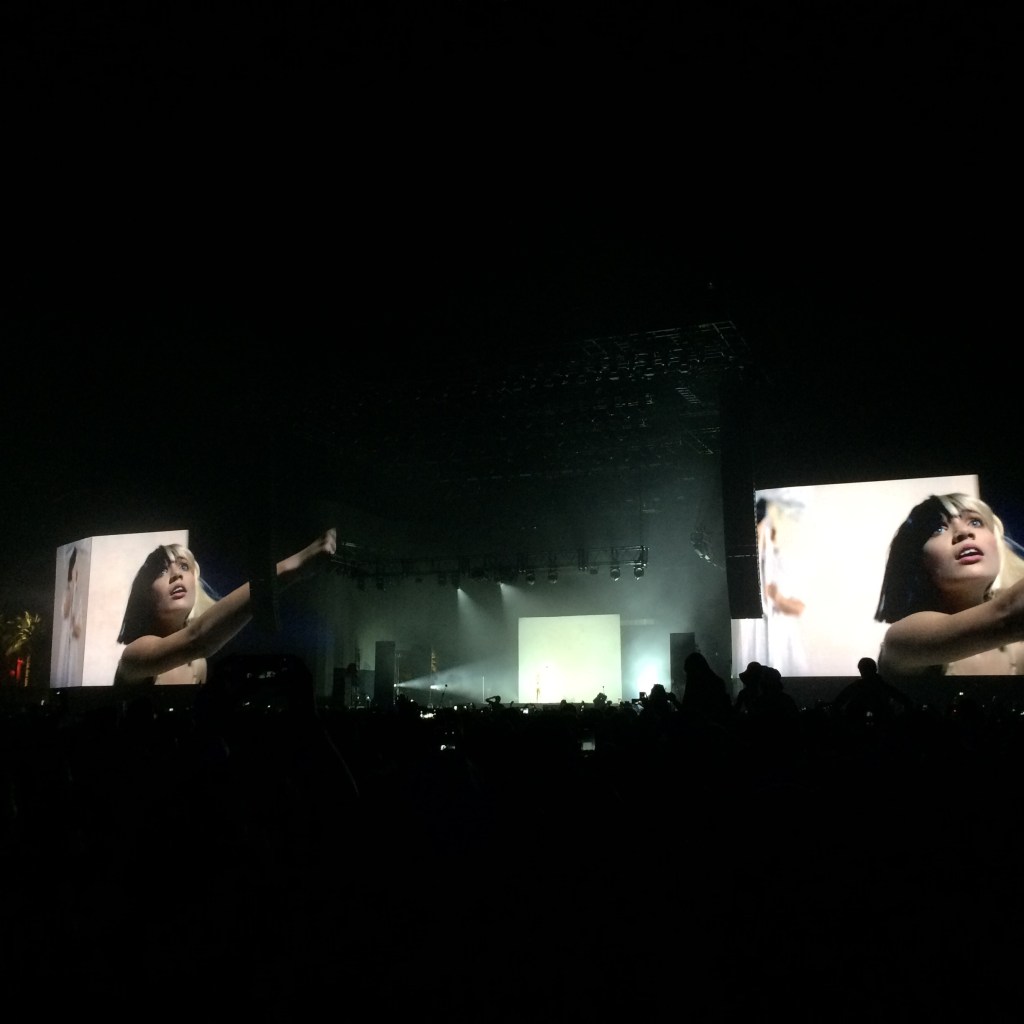
This is something I still practice, even though I’ve lived a more interesting life in interesting places, and despite that I’ve shared a lot of the experiences that people write songs about. It wasn’t until Sia’s visual campaign for 1000 Forms of Fear that I didn’t have to engage that projecting mechanism consistently, or at all, for that matter. Instead, it felt as if she was pulling it out of me, that she was giving a voice to a narrative in my head. The rapid cycling through emotions, the fight between the emotional undercurrents and the faces you have to present in day to day life, the agony of loneliness and the despair of modern life…it all felt so poignant.
There’s a commentary on mental health as well, of the way society treats those who suffer from psychological issues, the push to hide those things and bury them deep from everybody, including yourself.
It’s been a week since Sia’s performance and my eyes still well up, my chest tightens and I feel a tingling all the way out to my fingertips, of sorrow mixing with happiness every time I reflect on the performance. Even if I see a glimpse of the show, or Sia’s mouth singing from under the large wig and bow. It wasn’t just me, either. Everybody in my group who attended, some who hadn’t heard much of her music before were all floored. It was a spectacle and it felt like she was reaching out to all of us individually. I’ve never felt this strong of an emotional connection to a live performance before.
I was walking to work last week through downtown Minneapolis, and I got to thinking about the mental health piece of Sia’s visuals, about the tortured and lonely portraits she painted with Paul Dano and Kristin Wiig. The combination of their expressions and Sia’s music shook me, and I identified with the drastic emotional changes from one second to the next. It was something I came to recognize in my mom as well in the past few years, and something we rarely touched on before she was diagnosed with cancer. It wasn’t until I visited her before Coachella 2015 that we talked about it much in depth. It was in that visit that she told me this feeling of loneliness followed her throughout life like a dark cloud, and she felt it deep in her bones. She said it would inevitably follow her in death, as she would have to go through that alone as well. It was hard to hear that because I felt the same way, and it felt like nothing that anybody could ever say would change that.
I don’t know if Sia’s performance on Sunday night at Coachella will lift this curse of loneliness, but her music was more than just saying, “Yeah, I’ve totally been there.” It was a demonstration of what it feels like to have so little control over your emotions and your mental state. She was projecting me, and that was the piece that made the greatest difference and held the biggest impact. I had to step off the sidewalk and into an alley on my walk to work because I was crying so hard that I couldn’t stand. Some of what I was feeling was my own sadness, but most of it was knowing that my mom went through her life without having one of those moments, or the realization that life can be bearable. I don’t think I’ll be rid of the instability, or the depression, or the constant voice of doubt, and maybe that’s the best result I could have asked for from the show. It’s not something I can outrun, because it’s something that is a part of me. Sia stood there and faced it onstage in a demonstration, to show it’s possible to face your fears, and not allow them to rule your life.

 frankles
Leave a reply to Suzi Gillman Cancel reply